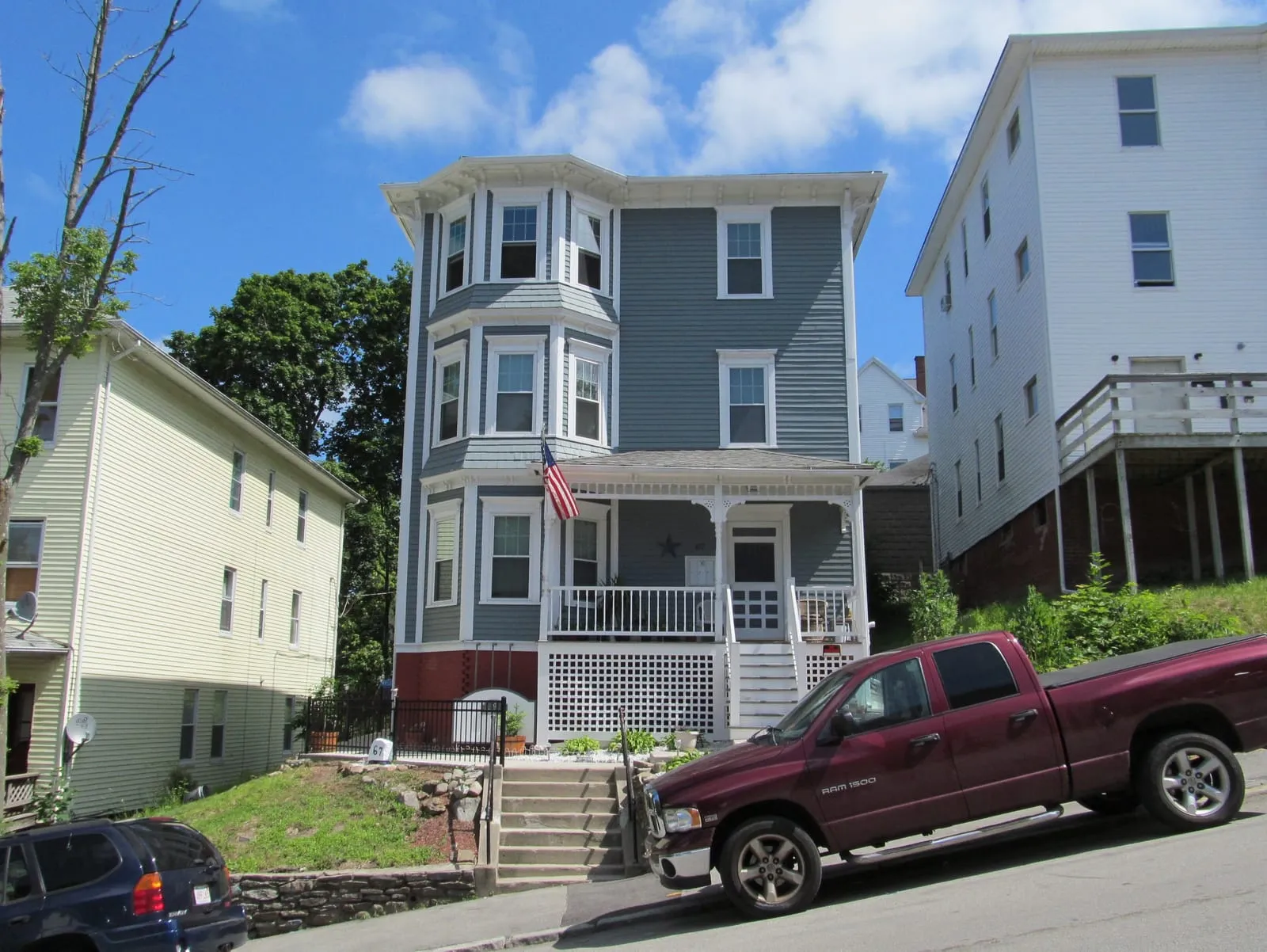

The Senior Circuit Breaker is a Massachusetts income tax credit for people 65 and older whose property taxes, or rent, take a big bite out of their income. For tax year 2025 (the return filed in 2026), it’s worth up to $2,820 [1][2]. It’s refundable , so you can get the money even if you owe no state income tax [3].
At a glance
- Maximum credit, tax year 2025
- $2,820 [1]
- Age
- 65 or older by December 31 of the tax year [1]
- Income limit
- $75,000 single, $94,000 head of household, $112,000 joint [1]
- Home value limit (owners)
- $1,298,000 assessed value [1][2]
- How to claim
- Schedule CB with your state income tax return [2]
| Limit | Amount |
|---|---|
| Maximum credit | $2,820 |
| Total income, single (not head of household) | $75,000 |
| Total income, head of household | $94,000 |
| Total income, married filing jointly | $112,000 |
| Assessed value of home (owners) | $1,298,000 |
How the credit is figured
The credit is the amount your property tax goes over 10% of your total income, up to the maximum [3].
- Homeowners count the real estate tax actually paid on the home they live in. In some cities and towns, half of water and sewer charges count too [3].
- Renters count 25% of the rent they actually paid [3].
Example: a single homeowner with $40,000 in total income paid $5,500 in property tax. Ten percent of income is $4,000. The tax is $1,500 over that line, so the credit is $1,500. If the tax had been $8,000, the credit would be capped at $2,820.
Who qualifies
For tax year 2025, you need to meet all of these [1][2][3]:
- You’re 65 or older by December 31, 2025. On a joint return, one spouse meeting the age test is enough.
- You own or rent a Massachusetts home and it’s your principal residence.
- You’re not claimed as a dependent on someone else’s return.
- Your total income is under the limit for your filing status.
- For owners, the home’s assessed value is no more than $1,298,000, measured before any residential exemption and after abatements.
- You file as single, head of household or married filing jointly. Married filing separately can’t claim it [1].
- If you rent, your rent isn’t paid in part by a government rental subsidy [3].
How to claim it
Fill out Schedule CB and file it with your Massachusetts income tax return (Form 1 for full-year residents) [2]. The credit is claimed only on a return, so file one even if you otherwise wouldn’t need to. Since the credit is refundable, any amount over the tax you owe comes back to you as a refund [3].
Keep your property tax bills and payment records, or your rent receipts and lease. You’ll need the amounts you actually paid during the year.
Local programs worth asking about
The Circuit Breaker is a state credit. Your city or town may offer more:
- Senior work-off programs. In cities and towns that adopt it, residents over 60 can volunteer for the town and get up to $2,000 a year off their property tax. Hours are credited at no more than the state minimum wage [4].
- Residential exemption. Some communities exempt part of the value of owner-occupied homes from tax, up to 35% of the average residential assessed value. It applies only to your principal residence, and you apply to your local assessors [5].
Both are local options, so availability depends on where you live. Call your assessor’s office to ask what your community offers.
Sources
- Massachusetts DOR: TIR 25-7, Annual update of real estate tax credit for certain persons age 65 and older
- Massachusetts DOR: 2025 Schedule CB, Circuit Breaker Credit
- Massachusetts General Laws, Chapter 62, Section 6, subsection (k) (senior circuit breaker credit)
- Massachusetts General Laws, Chapter 59, Section 5K (senior property tax work-off)
- Massachusetts General Laws, Chapter 59, Section 5C (residential exemption)
Common questions
What is the maximum Senior Circuit Breaker credit for 2025?
$2,820 for the tax year that began January 1, 2025, claimed on the return filed in 2026.
What are the income limits for the 2025 Circuit Breaker credit?
Total income of $75,000 for a single filer, $94,000 for a head of household and $112,000 for a married couple filing jointly. Married people filing separately can't claim it.
Can renters get the Circuit Breaker credit?
Yes. For renters, 25% of the rent you actually paid counts as your property tax. If that amount is more than 10% of your total income, you can get a credit, up to the maximum.